We had one positive test with IUI. I remember thinking, this is it. It’s going to work next time. Two more rounds of IUI and nothing. At this point we were about two years trying to conceive. It felt like an eternity.
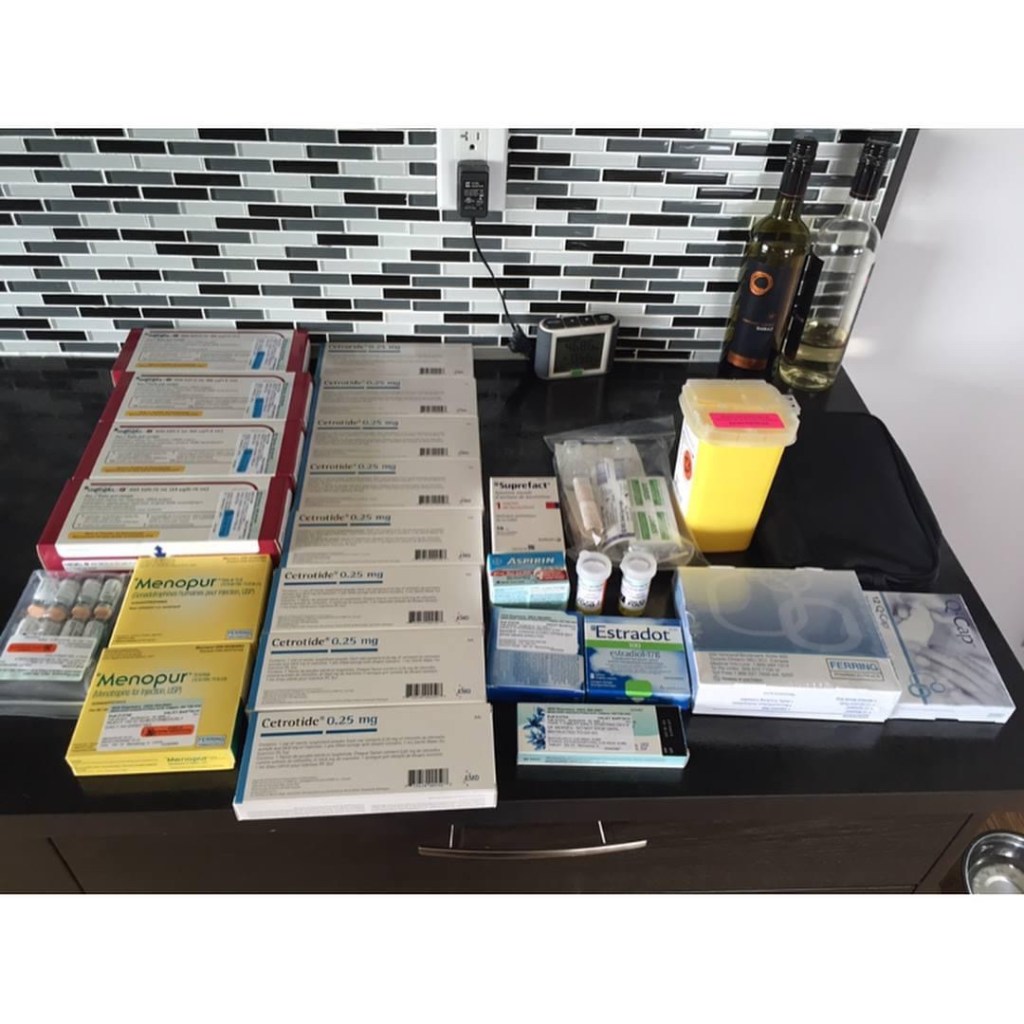
Our fertility doctor now told us that we would be good candidates for IVF. Infertility has been a part of our lives for so long that I sometime forget that not everyone knows what all of the terminology means. Before going into the details of our next fertility treatment, I thought I should explain what exactly IVF (invitro fertilization) is. IVF requires the female to be on a large quantity of injectable hormones for several weeks. When I say large quantity, I mean a couple thousand dollars of medication that is injected multiple times a day into the stomach, either by you or your partner. Anyone that knows me knows that I DO NOT like needles, so this was a mental hurdle to get past. The female takes the injectable hormones for several weeks. She is monitored through transvaginal ultrasounds every few days to measure follicle growth. Follicles are the little sacs that eggs develop in within the ovaries. Typically, an egg is released every month during ovulation and if it is not fertilized, it is shed with menstruation. In an IVF cycle, the goal is to stimulate the ovaries to produce multiple eggs at a time. Once follicles have reached a certain size, surgery is performed to aspirate the eggs.
Once the eggs are extracted, they are fertilized with the male’s sperm. This can be done a few ways but, in our case, they selected “the best” sperm and injected them into each egg using a microscopic needle. Then they incubate them in a petri for three days and hope they grow into an 8-cell embryo. If the embryos are healthy and strong on day three, they will continue to incubate them to day five or six. These embryos are now called blastocysts and have grown into multi-cell embryos.
The final step of IVF is to transfer the embryos or blastocysts into the female’s uterus. If the embryos do not look as strong, they will do a day three transfer with the hope that the uterus will give them the best environment to thrive. Blastocysts are typically more successful in IVF because the doctors can see that they are continuing to the multi-cell stage. Once transferred, the goal is for the embryo to implant into the uterine wall and begin to grow. Ten to fourteen days later they send the female for bloodwork to see if HCG (pregnancy hormone) levels have risen.
My next post will detail our first experience with IVF, but I will end this post by saying that IVF is costly, intensive, invasive, consuming, mentally, emotionally, and physically exhausting, and does not guarantee a pregnancy.
 Icing and Animal Crackers