The New Plan

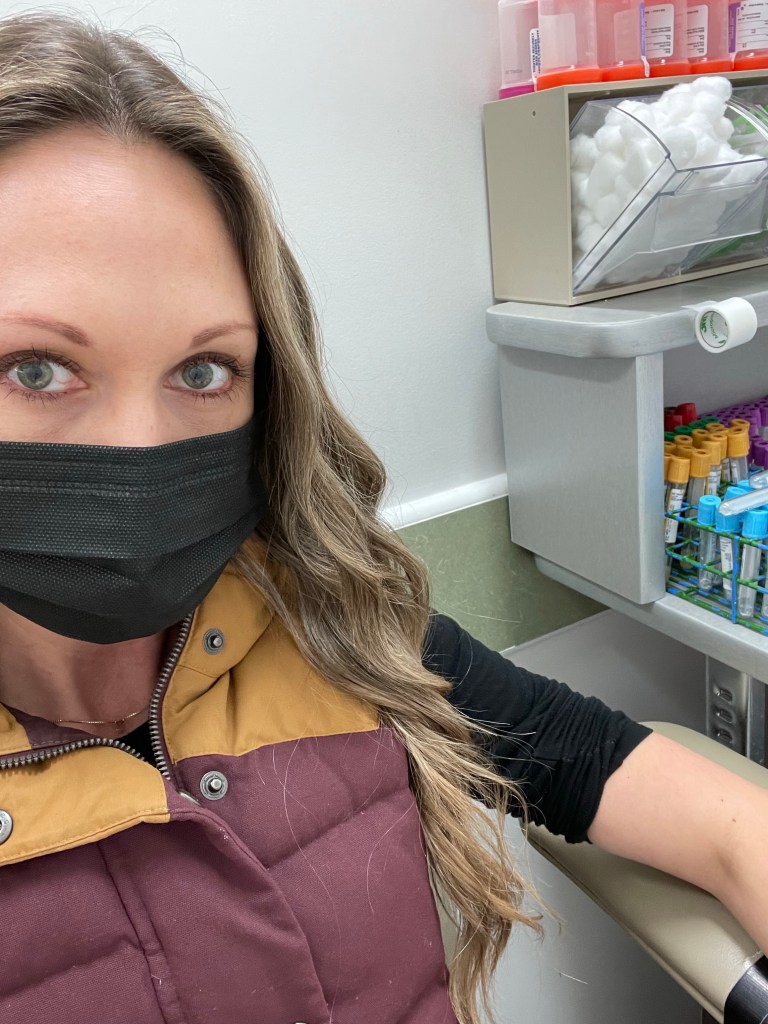
One of my many visits to the lab, waiting for my pregnancy hormone to return to zero.

People with infertility go through a lot of experiences that others don’t have to, experiences many people aren’t aware of. One of those experiences is having to continually go back to the lab for bloodwork to monitor your HSG level back to zero. Going into the lab for that initial blood test to find out if your pregnant is emotional. You’re filled with hope, fear, promise, and the unknown. Going back for bloodwork when you know you are going to miscarry feels demeaning. You are tracking your body’s failure. I had to go back four times before my level went down to zero.

The next thing people don’t understand is the physical pain you go through when your body finally releases what it has grown. Yes, our little embryo was only a few days old, but my body was preparing for it to grow. The amniotic sac had started to form. The physical and emotional pain of passing it is almost unbearable.

For several weeks after our chemical pregnancy, I was not myself. I was in a fog, I wasn’t enjoying things I normally would, and I wasn’t sleeping. I had so many emotions running through me: hurt, disappointment, disbelief, anger, sadness, frustration, and self-loathing. I started to write down how I was feeling and the experiences we had gone through. I felt better when I was writing. And that, of course, is how this blog came to be.

During the weeks that followed our pregnancy loss, I was determined to find a way for us to have a baby. I needed a solution that would finally end this chapter in our lives, end our infertility. I researched surrogacy and egg donors. I won’t go into details, but I have exceptionally amazing people in my life that we’re willing to help us with those things if that was the route we wanted to go.

During our follow up appointment with our doctor, we shared that we had explored these options and told her that we just wanted to make the choice that gave us the greatest chance of having a child. She said that using a known egg donor would likely be our best chance for success. Typically, when someone uses an egg donor, the eggs come to the clinic frozen. They are thawed, fertilized, and then transferred. If you are able to use an egg donor who is known to you, the eggs are fertilized before freezing. At this point, embryos can be genetically tested. This process can rule out abnormalities that may contribute to infertility. At the time that Dustin and I did IVF with our own embryos, genetic testing wasn’t available at our clinic.

The process of using a known egg donor is lengthy. There is testing the donor needs to go through (all of the same bloodwork and ultrasounds I had to do prior to my IVF cycles), as well as legal paperwork and counselling. Once all of that is complete, medication can be started in preparation for the retrieval. Because of this timeline and circumstances around our donor, our doctor suggested we try another donor embryo cycle in the meantime.

In the midst of all of this my thyroid had gone way out of whack. My doctor prescribed me Synthroid to bring my levels make to a normal range. Believing that my thyroid could have contributed to our pregnancy loss, we decided to try another donor embryo cycle. It wasn’t until March of 2022 that my thyroid level fell into normal range, but infertility is all about waiting…

Cheers to 10 Years

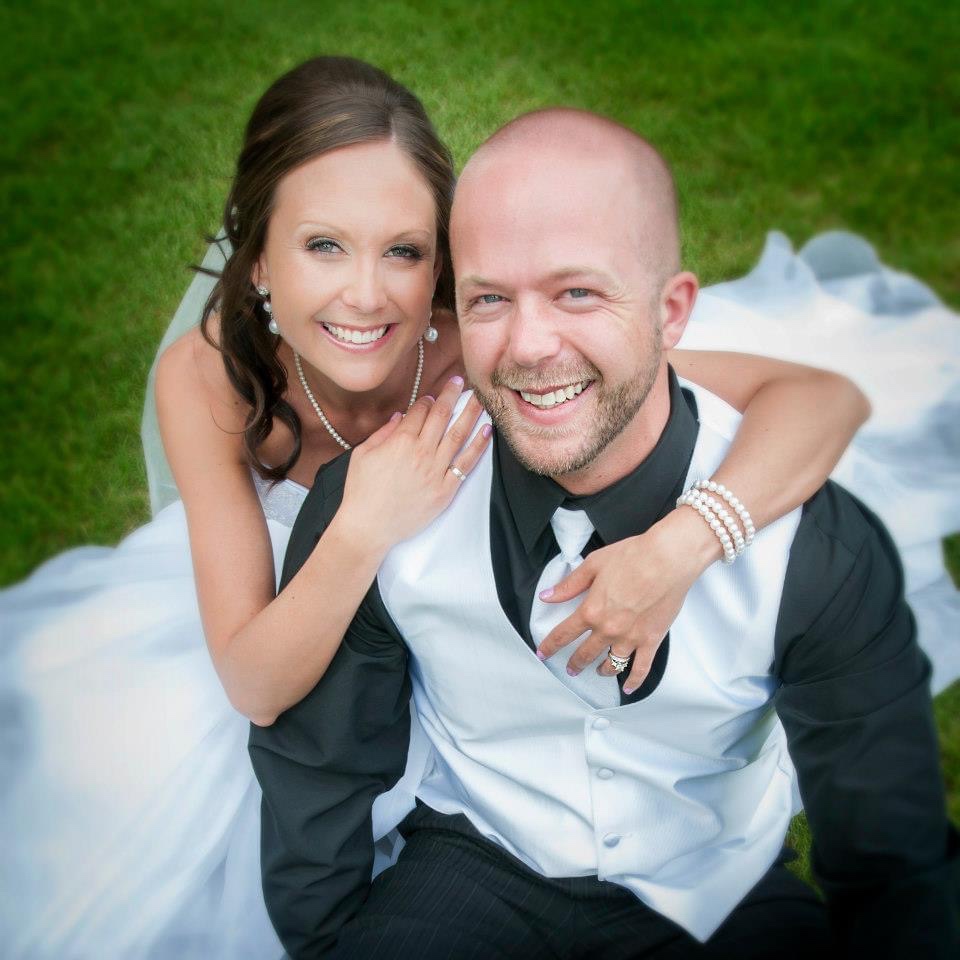
On Thursday, June 2nd we celebrated our 10th wedding anniversary! This milestone anniversary got me thinking about our lives over the last 10 years. I came to the realization that for 95% of our marriage, we have been trying to have a baby. That’s 9 years and 6 months of doctor’s appointments, ultrasounds, bloodwork, surgeries, tests, and fertility treatments. That’s a lot of time, money, physical, emotional, and mental energy to invest in something that has given us no return on investment.

I got thinking about everything we’ve learned about each other over these 10 years and through this experience. Here are three of them that I think are important: 

  1. How to be better communicators. Communication is something that develops over time in any relationship. You learn what topics or phrases spark interest or joy, and which ones will get under skin or cause defensiveness. You learn what times of the day or during what activities you communicate best. You learn what language to use when you need to have a heavy or sensitive conversation. Dustin and I have had to have many heavy conversations and make many tough decisions. When you are going through something as all-consuming as infertility, it starts to creep into every conversation and every decision. About 8 years ago, Dustin told me that the topic of infertility was wearing on him. He was anxious at the thought of me bringing heavy topics into every conversation. He asked if we could schedule times to talk about these things, rather than letting it infiltrate at any moment. That idea was so simple, yet so important for our communication. It allowed us to enjoy our conversation again because I knew there would be a time and a place for the heavy stuff. 
  1. Who we are as individuals and as a couple. Because our focus has not revolved around children for the 10 years we have been married, we have got to know each other very well. When a family has children, they are the center of their parent’s world. From my observations (as someone who does not have children), schedules usually revolve around the kids eating, sleeping, activities, sports, and so on. Dustin and I both have careers that require a lot of our time and mental energy, but when evenings and weekends roll around, we come home to only each other (and our pups). It has given us a lot of opportunities to know each other’s habits and interests, likes and dislikes. We have the luxury of making decisions and basing our schedule on only us.  
  1. What we enjoy together. It’s hard not to envy those couples we see playing with their kids at the park or loading up their vehicles on their way to their baseball practice. There are days when it’s hard not to think about opportunities we are missing, to watch our children learn and grow like everyone else. So, we’ve had to be intentional about finding activities we enjoy doing together. We like to drink coffee on Saturday mornings, go out to our favorite restaurants, spend time boating and golfing at the lake, binge watch TV shows, bike down by the river, cross-country ski, travel, go to concerts and games. We like to spend time with friends and family, but we also enjoy spending time with just the two of us.  

I wonder sometimes if my blog gives the impression that infertility consumes our life. Some days it does, but for the most part, we’ve learned not to let it be the focus of our marriage. It’s not the life that we thought we would have, but that doesn’t mean it’s bad. We actually have a wonderful life together and a lot to be thankful for. I can’t wait to see what the next 10 years brings!

Donor Embryo #2

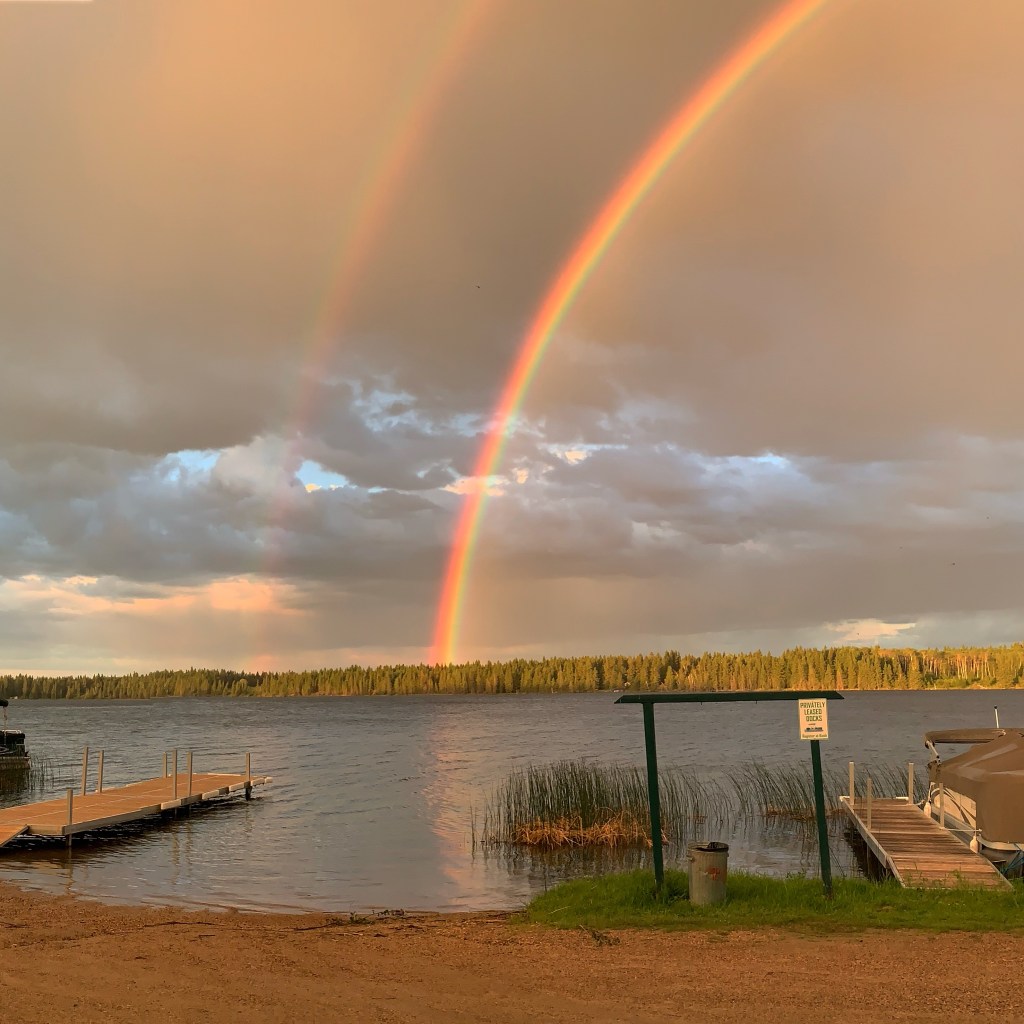
At the lake, just trying to “relax” after our embryo transfer.

I started this blog in September 2021, less than a month after our second donor embryo… after our second miscarriage. This week would have been our baby’s due date. My second last blog post has almost brought us full circle to the reason I started this blog… So here is the story of our second donor embryo transfer:

Our first donor embryo did not end in a positive result, potentially because of the embryo quality after thawing, or because of my thyroid, or a combination of the two. I continued to see my new naturopath who treated me for my endometriosis and thyroid while we looked for a new donor. The donor we chose also only had one embryo, but it appeared to be of great quality.  

After a miscarriage or failed cycle, you need to wait until for our next menstrual cycle before you contact the clinic. On the cycle following that one, you can start a medication protocol to prepare for your next transfer. That meant that the soonest we could try again would be July/August. We chose to do our next transfer right away because it meant I wouldn’t have to take time off work for appointments and post-transfer downtime.  

At the end of July, we made our trek to Calgary. We spent a few days relaxing, eating, and enjoying the sunshine before transfer day. Unlike our first embryo, this one survived the thaw 100% and looked great when we transferred. When we got home, we packed up and went to the lake. I tried to keep my mind busy. I tried not to look for symptoms or signs that I might be pregnant. About a week after the transfer, I sat in my sister’s camper in tears. The truth was, I had no symptoms and I still had 5 days to go until my test. I just felt the result was not going to be good and I broke down.  

On test day, I was petrified. I didn’t want to see the results because I felt it would be another heartbreak. We waited until we had finished supper that evening and then logged into my health account to see the results. My hands were shaking as I scrolled down and saw what I had waited 7 years to see again… I positive beta. I was pregnant. To celebrate, we went out and got ice cream and I felt a sense of calm that I hadn’t in almost a decade.  

The next day, I met my sister at the gym. I could not wait to share our news with her in the same way she had told me about her pregnancies, in the gym parking lot after a workout. After our class we walked to our cars, and I told her she might need hang on to her baby things so that I could use them next. She cried out “Finally!!” and we both started crying and hugging.  

That day, I went for lunch with a friend who I hadn’t seen in a long time. As we sat and caught up on what we had been up to for the last few months, she asked how things had been going with our fertility. I told her about our donor application, our failed transfer, and then finally, that I just found out I was pregnant. Happy tears. We talked about my baby.  

That afternoon I got a call from the clinic. They felt like my HSG level was a little low and wanted me to repeat my bloodwork the next day to make sure it was doubling. Of course, when you hear something like that, you can’t help but worry and fear the worst. I googled slow-rising beta and prayed that I was one of those rare cases that has a successful pregnancy despite it. 

The next day I went back to the lab for bloodwork. As I feared, my HSG was dropping instead of doubling. Our little babe wasn’t going to make it.  

Mother’s Day

I know Mother’s Day is a few weeks away but it’s a day that is on my mind right now. I have a very complex relationship with Mother’s Day. Growing up, Mother’s Day was just like Christmas, Easter, Thanksgiving, and birthdays. It was a day that grandparents, aunts, uncles, and cousins came together for a family supper. We would sit around a table of hams, turkeys, potatoes, salads, and buns; kids interspersed amongst the adults with dogs sniffing under our feet; jokes and stories and memories being shared. As an adult I now realize that my picture-perfect family is not necessarily the norm… not everyone lives near family, or has family, or gets along with their family. But this was my normal, and I loved it. I couldn’t wait to carry on these traditions when I had a family of my own. I didn’t think my future would look any different than my present. Then my mom got sick. 

It was Friday April 9th, Good Friday, when my Mom had emergency surgery. She had been unable to keep down anything she ate or drank. The doctors couldn’t figure out what was wrong. They thought maybe she had a twist in her intestine. They (painfully) tried to untwist without doing surgery, but it wasn’t working. They sent her in for surgery the next morning and that’s when they found the tumor in her colon. If you have never had to see a parent lying in a hospital bed, consider yourself lucky. It nearly took my legs out from under me seeing the woman who had always been so strong look so fragile. That Easter was the first time a family celebration was different from what I was used to. My Mom was the centerpiece at our family gatherings, and she couldn’t be there. 

Fastforward to May 2015. My Mom was in Vancouver for surgery to remove cancer from her lungs. My Grandma had just passed away after being in the hospital for several weeks. We had just gone through our second failed IVF cycle. That Mother’s Day was the first one to bring me a deep sadness. I didn’t know it then, but that Mother’s Day was my Mom’s last one on earth… and I didn’t get to spend it with her. The grief of losing my Grandma, the grief of never getting to meet our babies, the grief of not having my Mom with us, all compounded and pushed into a day that was supposed to be a celebration of mothers.

Mother’s Day has never gotten easier. May 2016 was the first one without my Mom. May 2017 was the first one after our third failed IVF cycle. May 2018 was the first one after our failed frozen transfer; it was also my sister’s first Mother’s Day. May 2019 I was hopeful that my surgery to remove endometriosis was going to be the answer to our unexplained infertility, and June 2019 we found it was not.

May 2021, I found out our first adopted embryo transfer had failed. It was 6 days before Mother’s Day. I spoke to my counsellor the day after I found out we weren’t pregnant. This is the same counsellor that helped me with the loss of my Mom, so she knew my story well. She asked me what my plans were for Mother’s Day. I didn’t have a plan, but she encouraged me to make one. The only plan I had was to pretend it wasn’t Mother’s Day. I should have planned better, because I totally fell apart. Besides 2015, that Mother’s Day was the hardest.

Now I’m thinking about this Mother’s Day. It’s been another year of loss and uncertainty. My sister (the beautiful soul that she is) called me a few weeks ago to ask what I would like to do for Mother’s Day. I’d like to mention that even though my sister is a mom, Mother’s Day is still hard for her. She also lost a mom and has had to navigate motherhood without our Mom alongside her. I told her I wasn’t sure yet, but I’ve been thinking about it since that phone call. Part of me just wants to hide and wait for it to be over because it’s impossible to leave your house and not be reminded that it’s Mother’s Day. The other part of me wants to be acknowledged and celebrated. Even though I’ve never held our baby in my arms, I’ve held one in my womb and in my heart. Even though I’ve never raised my own child, I’ve cared for and raised many children. Some may look at me and say, “She doesn’t have children, she’s not a mom. She doesn’t know what it’s like to be a mom”, but I am. It has taken me a long time to be able to say this out loud (or write it in words) but I’m worthy of being recognized as a mother.

I’m sending love to all the mothers, yet to be mothers, hoping to be mothers, mothers who have adopted, those who have lost a mother, those who have lost a child, those who have lost an embryo, those who have lost a baby, those who have a strained relationship with their mother, those who don’t know their mother, those who live far from their mother, those who choose not to be mothers, and those who are mothers in their hearts. Happy Mother’s Day 💕

It’s all Part of the Plan

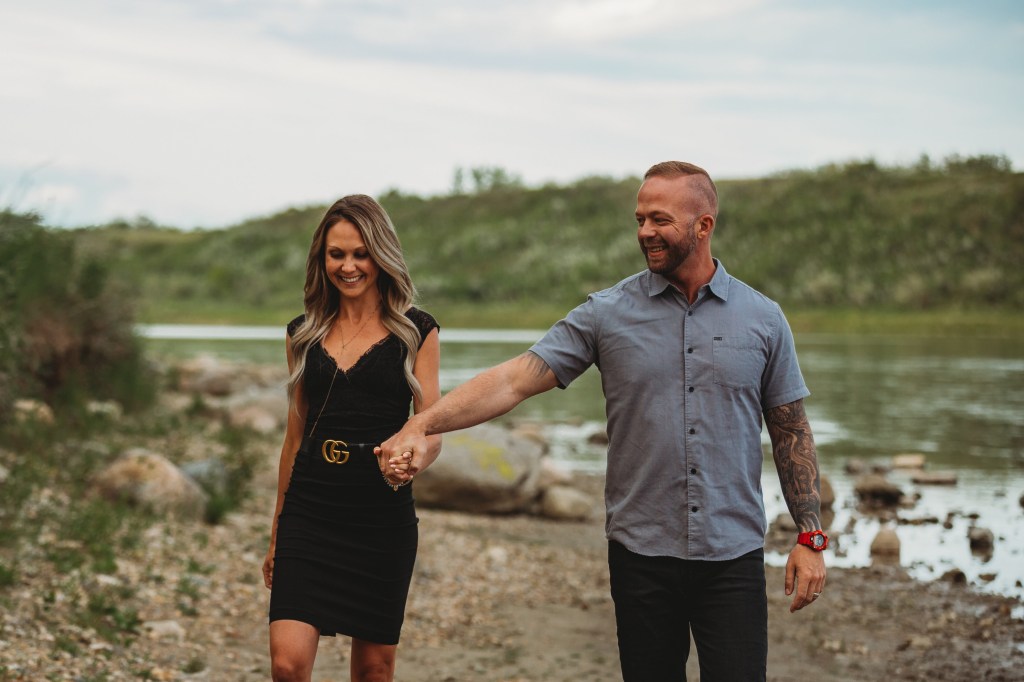
📷: Tamara Michelle Photography

I’m a planner and a problem solver by nature; it runs in my family. I don’t like to dwell on problems for too long. I’m always in search of a solution, a way to move forward, the next step. For planners like me, infertility is your worst nightmare. You plan, the plan doesn’t work, you make a new plan, that one doesn’t work, and the cycle continues.

I remember our first visit to the fertility clinic. IUI seemed reasonable… relatively inexpensive, not overly invasive. We said we would commit to doing more than round of IUI, but we didn’t think we would (need to) do IVF. That was our plan. When our IUIs ended in failed cycles and a miscarriage, we had to make a new plan. Now IVF was on the table. After doing IVF we would have a baby because (we thought) people with infertility have babies after doing IVF. Then our IVF failed and again, we needed a new plan. Another IVF. Another failure. New plan. New clinic. New doctor. New medication. New IVF cycle. Another failure. New plan. Take a break. Frozen embryo transfer. Another failure. New plan. Surgery. New information. New doctor. New plan. Embryo donor. Donor embryo transfer. Another failure. What was the new plan going to be now? If you had asked me 8 years ago if I would have done 3 rounds of IVF, a frozen transfer, and a donor embryo, I would have told you no. I didn’t think that would (need to) be part of the plan. But you don’t ever really know until you get there; until you’re faced with that reality.

In our donor embryo program, they allow for three transfers. If you have not had a successful pregnancy after the third try, they will not allow you to continue. After our first attempt failed, I started to panic. Embryo donation was the plan and I had to find a way to make it successful. Our appointment with the doctor was not for another month, so in the meantime, I tried to move forward… find a solution. A few years prior, someone had reached out to me and recommended a naturopath that had helped her have a successful pregnancy. At the time, I wasn’t interested. I had been to a naturopath who also did acupuncture, and it hadn’t helped in my first round of IVF. I decided now I was ready to give this recommended person a try. 

There are some people you just click with, and this naturopath was one of those people. She asked me questions about our history and how we had come to the point we were at in our journey. She recommended a blood panel as she suspected my thyroid may be over or under active. It turns out she was right. She began treating me for my thyroid and my endometriosis.  

We had our follow up appointment with our doctor in Calgary. We were informed that even though the embryo was of high quality when it was frozen, only 60% of the embryo survived the thaw. If 60% or more of the cells survive, they consider it viable for a transfer, even though the chance of success diminishes. We were told that because of the embryo quality, the program would allow us to do three more transfers. With this new information from both the doctor and naturopath, we decided to try again using a new donor in August of 2021.  

It was not part of the plan to do this process twice, but like I said, infertility is a planner’s worst nightmare.  

When Hope is Replaced by Reality

We returned home the day of our first donor embryo transfer. My doctor had written a note allowing me to be off work until my pregnancy test. The plan was to be at home, relaxing. In hindsight, being at home alone with no one to talk to was not very relaxing. I spent every day wondering if I could feel symptoms; I googled embryo donor success stories; I looked up what I should and shouldn’t be eating and what skincare is safe for pregnancy. Anyone who has endured the two-week wait, especially after a fertility treatment, knows that the internet is not your friend during that time. As I mentioned in my last post, we did not tell any of our family members that we were doing the transfer. For those 10 days, I pretended I had been at work each time I spoke with my dad and sister. I wanted to tell them about what we were going through so badly but being able to surprise them with our pregnancy would make it all worth it. 

My bloodwork was scheduled for Monday, May 3rd, 2021. I stopped at the lab before work, nervously waiting all day for the phone call. When my mom was dying, I began to see a counsellor through the cancer clinic. Not only did she help me grieve the loss of my mom, she also had experience with infertility. She had gone through IVF herself and had been a counsellor at an infertility clinic. I had kept in touch with her after my mom’s death and made a phone appointment with her that afternoon. I was still at work at the time of my appointment.  I shared with her what I was going through and that I was expecting the results that day. I was so anxious about the results I could hardly stand it. She recommended I log on to my online health records rather than waiting for the phone call from the clinic. When I got home that evening, I logged on. There it was… my HCG-Beta was 0. I was not pregnant. Not even a little bit. 

Dustin came home from work to find me absolutely devastated. Embryo donation was supposed to be the answer to our infertility. And it had failed. The rest of that night was a blur. I don’t remember what I did or what we talked about. The following week was one of the most emotionally and mentally taxing times I had had since my mom died. I knew I needed support, and the only way to let my friends and family know that I needed that was to tell them what happened. My dream of sharing our news that we were going to be parents was stolen from us once again. 

Here is the thing about fertility treatments, they are not a guarantee. Medicated cycles, IUI, IVF, egg donors, sperm donors, embryo donors, surrogates, are all there to provide hope. Hope that one day, you will have a healthy baby. When that hope is replaced by reality (the reality that treatments may or may not be the solution to your infertility), it crushes you. It feels like your life crumbles around you… it turns to dust… and slips through your fingers.  

The Element of Surprise

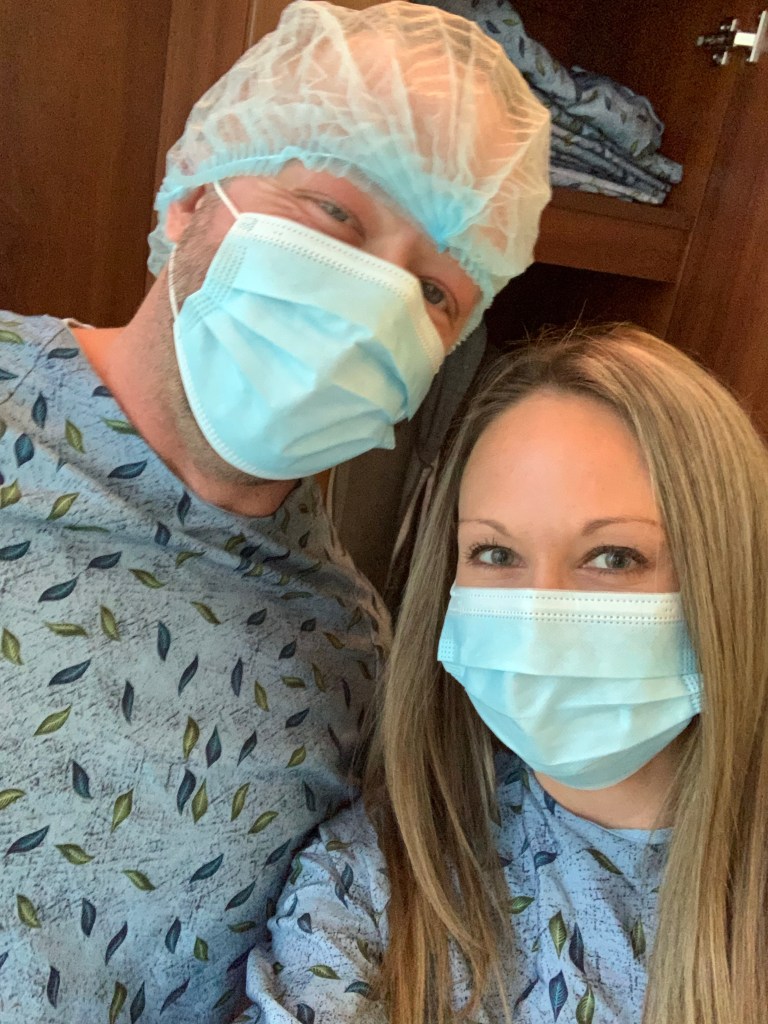
Ready to go into the OR for our first donor embryo transfer.

Dustin and I were married in 2012 and started trying for a baby in 2013. From the day we started trying, I imagined how I would tell Dustin I was pregnant. I thought about how I would surprise our family and friends with the news. I might be remembering incorrectly, but I think Facebook pregnancy announcements became popular around 2010. I recall scrolling through and seeing cute pictures of onesies beside sonograms, pairs of baby booties beside mom and dad’s shoes, dogs with “Future Big Brother” signs draped around their neck. I thought about what clever post I would put up; maybe me standing in front of a road sign at our lake that said, “Bump Ahead” or our dog Jaxson with a baby toy in his mouth.

One of many things infertility robs you of is the element of surprise, especially if you are open about your infertility. I would never be able to surprise Dustin. Our date of conception was always timed, and our pregnancy test was always scheduled. We didn’t tell our families when we did our first round of IUI, but when we had our first chemical pregnancy, I needed my family’s support. After that, I shared our next five fertility treatments with my family. I grieved the fact that I would not be able to surprise our family and friends with good news (if it came), but I knew they would be just as ecstatic as if it had been a surprise. At that time, it was more important that I had their support during our treatments.

When we got the phone call that we were at the top of the embryo donor list, I saw it as an opportunity to have that “surprise” experience. If no one knew what we were doing, they would be completely shocked when I shared that we were expecting. I was also very confident that embryo adoption was going to be the answer to our infertility. I dreamed about how we would share the news with our families. My sister had told me about both of her pregnancies while we were standing in the parking lot outside our gym. I planned to tell her the same way. I would tell her I was pregnant, and we would hug and cry. My due date would be halfway through her maternity leave, so we would have the experience I had always dreamed of. Our babies would grow up together. I would be pregnant on Mother’s Day. I wouldn’t tell anyone yet because it would be too early, but I would know. Then on Father’s Day, I would tell my dad that he was going to be a grandpa one more time. He would cry joyful tears and we would bask in the excitement of this little miracle. I had it all planned out in my mind.

We told a few close friends and co-workers that we were going for our donor transfer. We packed up our dogs and drove out to Calgary, all the while keeping it a secret from our families and most of our friends. I talk to my sister every day, so she called several times while we were gone. Never did share that we were there. I acted like I had been at work that week, even though I had been resting at home. It was so hard to be untruthful, but it would be worth it once we had that positive test! We had our transfer and headed home with our little embryo on board, ready for the two-week wait.

***edit*** this was our first donor embryo transfer that we did in April of 2021. This was not recent. Sorry for the confusion ❤️

Embryo Adoption

We put our names on the embryo donor list in June of 2019. On November 23rd, 2020, I got a phone call from the clinic. We were finally next on the list. During that year and a half, I wondered if we would be ready when the time arrived. All my doubts vanished when we got the call. I couldn’t wait to start the process. 

So, what does the embryo donor process entail? 

  1. Initial appointment with the doctor. This is to go over the required tests and lab work, as well as to discuss the selection and transfer process. 
  1. A meeting with the clinic psychologist. All people going through the embryo adoption process are required to talk with the psychologist. The decision to carry, give birth to, and raise a donor baby comes with a lot of feelings, emotions, and questions. The psychologist presented us with questions to think about, resources, and support for our upcoming transfer. 
  1. Updated HSG, bloodwork, and ultrasounds. An HSG must be completed within a year of an IVF or frozen embryo transfer. The ultrasound is to measure the uterine lining and check for fibroids, polyps, and cysts.  
  1. Both Dustin and I were required to have a criminal record and vulnerable sector check from the police. 
  1. Home study with a Social Worker. Typically, the social worker comes to your home for the meeting, but because of COVID, our meeting was through Zoom.  The purpose of the home study was to examine our personalities, our relationship with one another, our upbringing, how we resolve conflict, what we enjoy doing together, how we support each other, how we interact with friends and family, and what our parenting styles would be. They also look at whether you have a suitable home, neighborhood, and lifestyle to raise a child. It was a great exercise in communication and helped us learn even more about each other. I think it would be valuable for anyone having children to go through this process. 
  1. Choosing embryos. Part of the home study is filling out a questionnaire on your ethnicity, physical characteristics, personality traits, and family history. Donors provide information such as family medical history, number of children born, and physical traits. The clinic chooses several embryo donors who have similar ethnicity and physical characteristics to the recipients. Embryo adopters then choose which donor they would like to use. 
  1. Once the steps listed above are complete, a new medication cycle is started to prepare for the transfer of a frozen embryo. 

It took from January to April to complete everything listed above. There is so much detail it was hard to narrow down what to share. This is just a brief overview of the donor process. If anyone reading has specific questions or wants to know more, please feel free to send me a message. I’m happy to share our experience of this unique process. 

Infertility: Going Public

When I started my blog and Instagram page, I had to mentally prepare myself to share this personal story publicly. I have found writing therapeutic. I know that infertility is a topic that has become more common, but there are still many aspects people are unaware of unless they have gone through it themselves. My hope was to share our story, but also to educate and provide answers to questions people may not want to ask. One of my favorite parts about sharing is the connection I’ve made with others. I’ve received messages from people going through or know someone who is going through similar experiences. I’ve had people reach out to tell me they’ve learned something or that they had no idea about the mental, physical, emotional, spiritual, or financial toll associated with infertility.  

Everything I have shared regarding our testing, procedures, treatments, and losses have been past tense. They are stories from our journey that we have experienced, mourned, grieved, and learned from. As I get closer to sharing our most recent endeavors, I wonder if I will ever feel comfortable sharing experiences in real time.  

I follow several accounts of couples who are going through infertility, recurring miscarriages, IUI and IVF cycles, and adoption. All of them share daily updates: ultrasounds, medical appointments, pregnancy tests, etc. I know, of course, that they are not sharing everything. But they do share some very personal, real-time experiences. There are two women who I feel a connection to, even though I don’t know them, and they don’t know me. One lives on Vancouver Island and the other in Florida. They have both struggled with infertility for 9 years, like I have. Coincidently, they were doing IVF cycles at the same time. I watched their stories every day, relating to the injections, the fluctuation in hormones, the egg retrievals, the three-day wait, the embryo transfers, the uncertainty, and the ten-day bloodwork. As I followed, I relived all the feelings I had during those stages. Both women had done previous IVF cycles but had never transferred embryos because of embryo abnormalities. This was the first time they had held their little bundles in their wombs and hoped for them to stick and grow. Their stories were filled with nervousness and hope. One had sworn that she “felt pregnant”. She had cravings, cramping, breast tenderness, and skin irritation. I have felt all these things and also took them as positive signs. I have also learned that these symptoms can occur because of the medication.  

Both women’s transfers ended in loss. One started bleeding the night before her bloodwork. The other found out after the bloodwork results. Heart wrenching. Shitty. Unfair. Devastating. All the emotions I experienced, they experienced. The difference is, I was able to grieve privately. They are grieving in the eyes of thousands of people. That takes courage to share that extremely sensitive piece of your heart. 

I also follow a woman who struggled with infertility for 10 years. She recently announced on her page that she is pregnant. She did not publicly share that she was going through an IVF cycle until after she was 10 weeks pregnant. When she shared this news, I felt a mixture of hope, happiness, sadness and jealousy. I follow this person because I could relate to her struggles, but now she has moved on to the next chapter while I remain part of the infertile club. Pregnancy posts are always sensitive for me. I made the choice to unfollow this person. It is not that I’m not happy for her, but I’m not in a place where I feel ready to follow pregnancy updates instead of IVF treatments.  

So, why do I bring all of this up? I have decided to publicly share a large part of our journey. If we do decide to continue with more fertility treatments and if we do become pregnant, I have reservations about sharing in real time. I know that some who follow my blog are friends and family who have not struggled with infertility; therefore, would be overjoyed to see a pregnancy announcement. I also know that some who follow are going through the same thing we are. I know from experience that it is possible to feel happy for the person and sad for yourself at the same time. I don’t ever want to blindside anyone with a social media pregnancy announcement. I guess I haven’t come to a decision with regards to sharing our future plans. For now, I’ll continue to share our past and see where our story goes. 

There is More than One Way to Make a Baby

My laparoscopic surgery to remove the endometriosis was successful. Feeling hopeful that this had been part of our undiagnosed problem, I made an appointment with our fertility clinic to review the results of our surgery and discuss next steps. After endometriosis is removed, it can grow back if not managed. Birth control is commonly prescribed to prevent the tissue from growing. Being on birth control is obviously counterproductive in what we are trying to achieve. My OBGYN advised that I could abstain from it for 6 months, but if I did not become pregnant in that time, I would need to start taking it.  

We had our appointment in Calgary exactly 6 months after my surgery. The clinic has a team of doctors, all specializing in different areas of infertility. They assigned us to a doctor who works primarily with egg and embryo donor patients. We brought the surgery report and photos to the appointment for our new doctor to review. We also had updated bloodwork, ultrasounds, and semen analysis done. In the meeting, we went over our history and past IVF cycles. The news was not what we hoped for. The area that the endometriosis was removed from would not have had an impact on a successful IVF. Everything still appeared to be “normal” in our other tests. She said based on our history, our chance of having a biological baby (naturally or through IVF) was less than 3%. We had never done genetic testing, but based on what our outcome had been, it was likely that we produced genetically abnormal embryos. We could try another IVF cycle and have the embryos tested, but with a 3% chance of pregnancy, she asked if we had considered a donor.

Donors in the infertility world… Sperm donors, egg donors, embryo donors, surrogates. Babies are made in all sorts of ways. It is overwhelming when you are put in a situation to decide on one. Because we do not truly know why we can’t have biological children, we’re trying to make a decision using the information we do have. Things we know for sure: an embryo can implant (because I’ve had a chemical pregnancy), I do have eggs (because my AMH is in the normal range), I have low response to medication (because I needed a significant amount of medication to produce more than two eggs), our embryos are able to make it to day 3, but not good enough quality to wait until day 5 transfer (based on our previous IVF cycles), my tubes are open and my uterus is the right shape (based on my HSG), the lining of my uterus reaches proper thickness and shape before transfers (based on ultrasounds). What we do not know is if it is the quality of my eggs, quality of Dustin’s sperm, or our DNA combined that is causing issue. Based on our knowns and unknowns, we decided to put our names on the embryo donor list. 

What is an embryo donor? When a patient goes through IVF, they can end up with multiple viable embryos. If the patient has a successful pregnancy or pregnancies and feels their family is complete before using all their embryos, they can donate them to the donor program. Patients like Dustin and I, who are unable to have children of their own, can apply to adopt embryos. This means the embryos are created from another couple’s egg and sperm, but I would have the opportunity to carry the baby and experience pregnancy. The process of embryo adoption is like adoption of a baby: background checks, home studies, counselling, as well as bloodwork, an HSG, and ultrasounds. But first, the waiting list. It could take up to two years before our names would reach the top. So, we left the clinic that day ready to wait.

Dustin and I have less than a 3% chance of having a biological child. I can’t quite put into words how that makes me feel. Dustin is my other half. Not only do I think our children would have been amazing human beings, but I think they would have been pretty darn cute. It took me years of grieving before I could come to terms with it. Even though I’ve accepted it, I’m still grieving.

We will never hear “He’s got your eyes” or “She looks just like you did at that age”, but we will love that child more than anyone could know. Because regardless of DNA, that child will be a part of us and a part of our story. That child will always know what a miracle they are. That child will be loved beyond words.